
October 2026
Marlboro Volunteer Fire Company Welcomes New Rescue Truck with Traditional "Push-In"
Smart purchase saves taxpayers significantly while expanding crew capacity
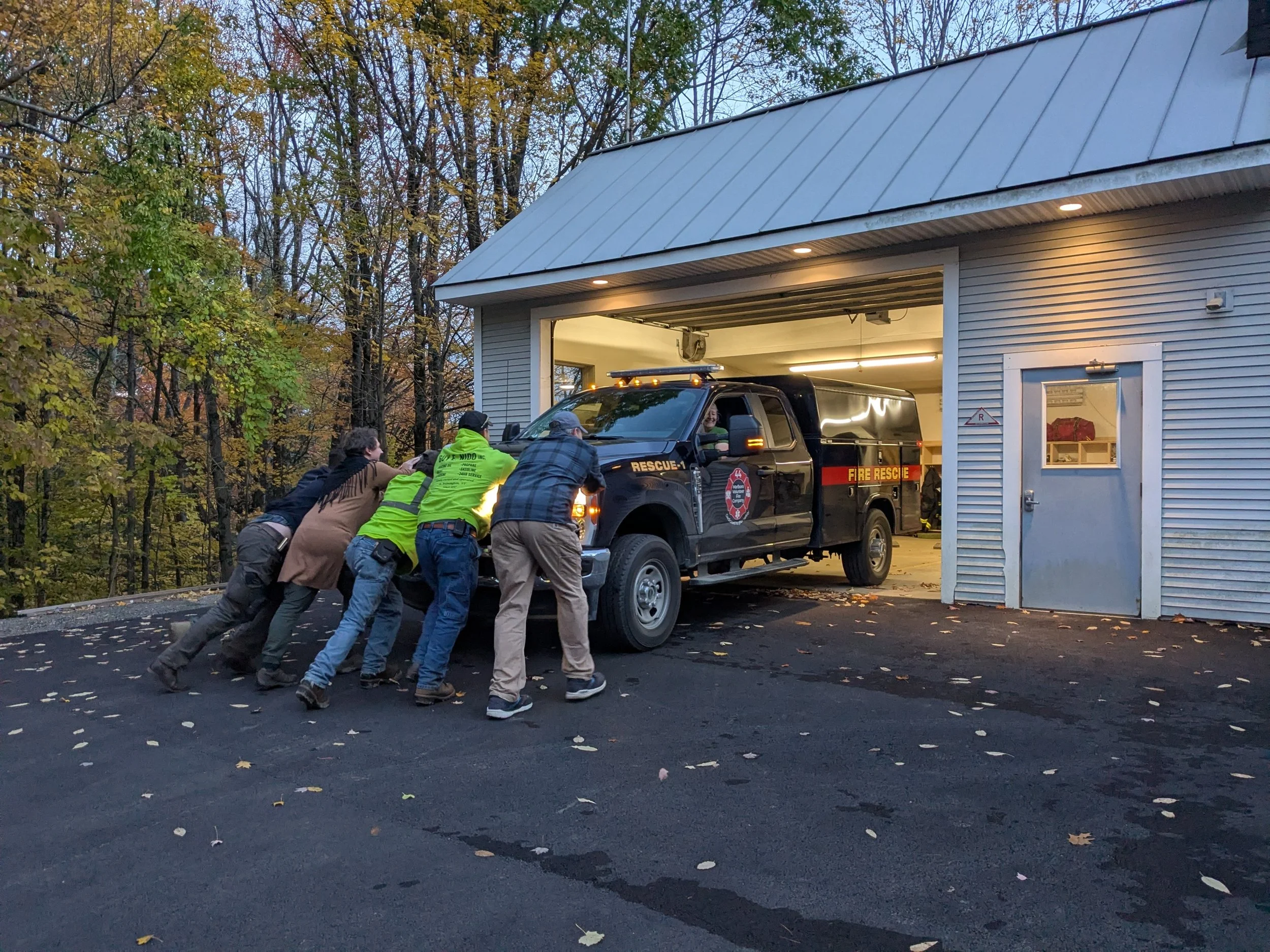
MARLBORO, Vt. — The Marlboro Volunteer Fire Company (MVFC) officially put its new rescue truck, a 2025 Ford F350, into service on October 14 with a traditional fire service "Push-In" ceremony. The truck cost a fraction of a conventional rescue vehicle and improves how the department responds across its rural coverage area.
The department's previous rescue truck had become increasingly unreliable, including stalling on Route 9. A new replacement rescue vehicle would have cost upward of $250,000, and comparable used rescue trucks were listed at around $150,000. Instead, Fire Chief Dan Elliott and the MVFC board purchased a well-equipped 2025 Ford F350 from Ford of Claremont, N.H., for $67,000 and received a $4,000 trade-in on the old vehicle. With outfitting that included emergency lights, a siren, a roll-out tray bed, a cap, and graphics identifying it as a rescue vehicle, the total came to approximately $78,000.
"We're always looking for ways to do more with less, without ever compromising on the service our community depends on," said Carol Ann Johnson, president of the MVFC board. "The savings to the department, and to the taxpayers of Marlboro, are significant."
Chief Elliott said the department gave up nothing in the switch. "We're not losing anything in this transition. All the same equipment is on board. And what we're gaining is considerable. The F350's compact size means it can navigate the tight driveways and back roads that define our rural community. It goes to every single call. And unlike the previous rescue vehicle, this one requires no special driver's license, which means more of our volunteers can get behind the wheel. Perhaps most importantly, the extended cab can carry up to five volunteers at once, versus the two-person capacity of the old truck. That's a meaningful difference when every second counts."
The extended cab also gives people involved in an incident a warm, safe place to sit, a comfort the old truck could not offer. And because the F350 runs on gasoline rather than diesel, the department expects lower fuel costs.
Johnson thanked Ford of Claremont for its work on the purchase. "They were responsive, helpful, and terrific to work with," she said.
The October 14 Push-In marked the truck's official arrival. When a new apparatus joins the fleet, volunteers, board members, and friends of the department back the truck into the station by hand, ushering in good luck for the years ahead. The tradition dates to the era of horse-drawn fire engines. Because horses generally do not back up any real distance, firefighters would unhitch them and push the engine into the bay facing outward, ready for a quick hitch-up when the next fire call came.
"This truck is a reflection of our partnership with the community — smart, resourceful, and ready to serve," Johnson said.
About the Marlboro Volunteer Fire Company
The Marlboro Volunteer Fire Company is an all-volunteer fire and rescue department serving the town of Marlboro, Vermont since 1948. We have approximately 17 active volunteers and we responded to 175 calls in our last fiscal year, July 1, 2025 - June 30, 20206. Follow the MVFC on Facebook at https://www.facebook.com/MVFC44
September 29, 2026
Shout-out to three of our MVFC volunteers!
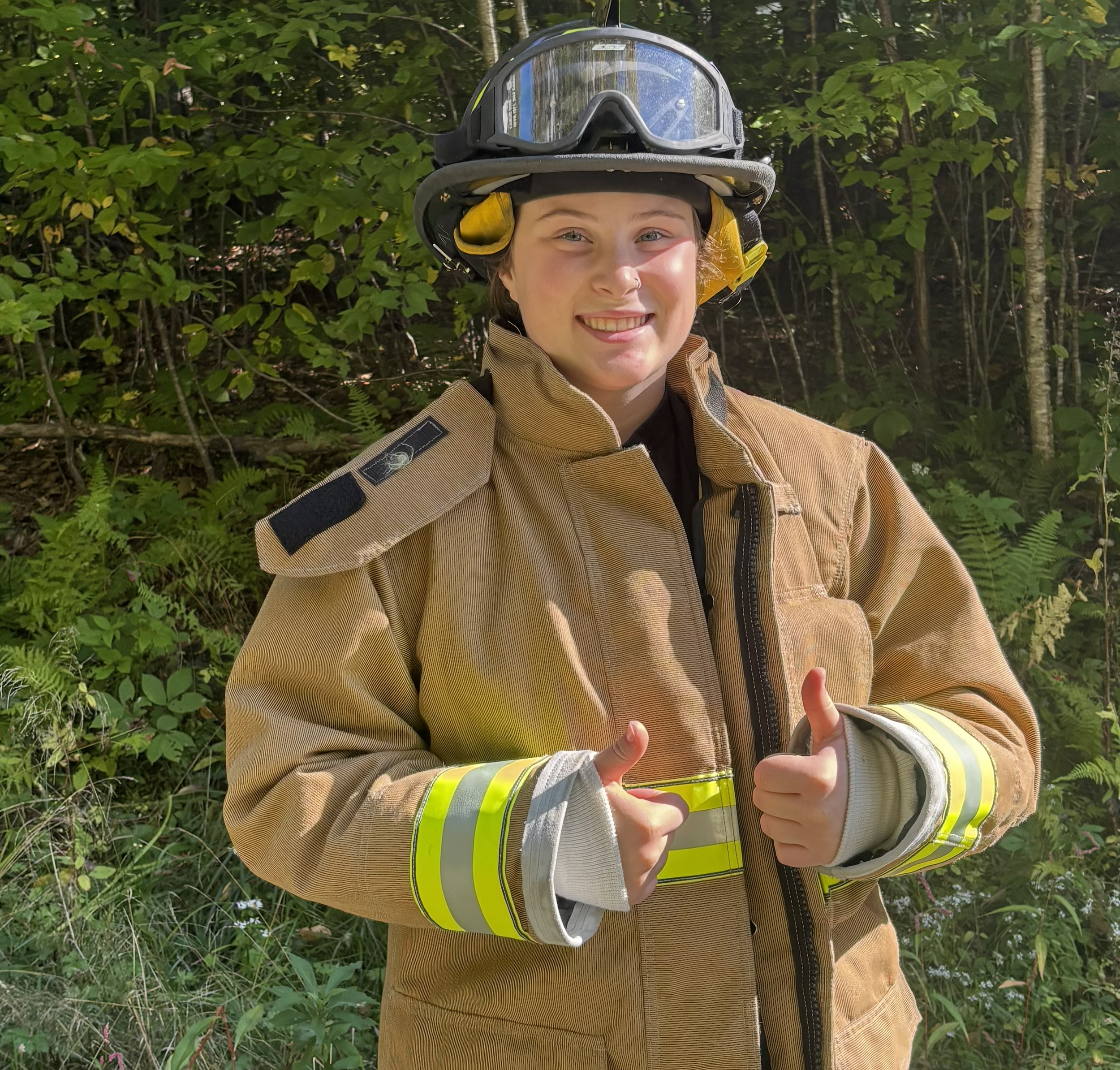
Please join the Marlboro Volunteer Fire Company board in recognizing Jay Pierce, Cyrus Burt, and Rosalie Smith for stepping up to take Firefighter I training!
Firefighter I prepares volunteers to work as part of a firefighting team in hazardous conditions. The course follows the NFPA 1001 national standard for firefighter qualifications and combines online coursework with hands-on training. It's a real commitment of time and energy on top of work, family, and everything else life brings, including regular drives to Bennington.
Jay, Cyrus, and Rosalie, thank you for your dedication to keeping Marlboro safe.


September, 2026
Fall Fire Safety: Keeping Marlboro Warm and Charged, Safely
This past fiscal year, Marlboro Volunteer Fire Company responded to 175 calls — up from our usual average of 120, a 45% jump. Thank heavens this increase is not due to home fires, but, we still need you to do everything in your power to keep safe. That's why this fall, we're asking everyone in town to take a closer look at two fire risks: the wood stove warming your home, and the lithium-ion batteries charging in your house and garage.
Wood Stove & Chimney Safety
Before you light the first fire of the season, have your chimney inspected by a certified chimney sweep and have it cleaned. Most chimney fires trace back to creosote, a tarry residue that builds up inside the flue as wood burns; a crack in the flue or masonry can let flames and superheated gases reach the walls or attic. An annual inspection and cleaning catches both problems before they become an emergency.
A few other essentials:
Burn only seasoned hardwood — oak, ash, maple — split and dried for at least six months. It is not recommended to burn Pine (softwood); green or wet wood smokes more and speeds up creosote buildup. It’s the creosote buildup that is so dangerous, causing chimney fires, etc.
Keep three feet of clearance between the stove or fireplace opening and anything flammable: furniture, curtains, rugs. For the stove itself, NFPA standards call for 36 inches from combustible walls or ceilings unless the manufacturer's clearance is lower.
Dispose of ashes safely. Ashes can hold hot embers for days and days. Scoop them into a metal container with a tight lid, and keep that container outside, away from the house, deck, or anything else that burns — never in a cardboard box, bag or compost pile.
Never leave a fire unattended, and never use gasoline or other flammable liquids to get one started.
Test your smoke and CO alarms –Smoke alarms last 10 years. They need vacuuming and they should be tested monthly to make sure the alarm and/or its batteries are working. A working smoke alarm gives you the precious time you need to get out----you only have about 2 minutes to get out after smoke is detected.
If something doesn't look right — a chimney with crumbling mortar, a stovepipe that seems too close to a wall, a stove that's smokier than usual — call us. We'd rather answer a question in October than a call in January.
Fire Prevention Week 2026: October 4–10
This is the second year running that Fire Prevention Week has focused on lithium-ion batteries — this year's theme is "Charge into Fire Safety: Safe Charging Is a Superpower." That’s not just phones and laptops. It's e-bikes, cordless yard tools, power tools, and electric vehicles charging in our garages and barns. Remember to have an alarm in your garage and basement too!
Quick tips:
Use only the charger that came with the device — mismatched cords or chargers can damage the battery.
Charge on a hard, flat surface, not on a bed, couch, or under a pillow, where trapped heat can build.
Unplug once fully charged, and watch for warning signs: swelling, unusual heat, odor, or smoke.
Charge e-bikes, scooters, and larger power tools outside or away from exits — bigger batteries mean bigger fires if something fails.
Charging an electric vehicle? Use a dedicated circuit and professionally installed charging equipment, and keep the charging area clear of clutter and combustibles — the same battery risks apply, just at a larger scale.
Look for a safety certification mark (UL, ETL, CSA) when buying anything with a lithium-ion battery.
In the garage: skip the standard smoke alarm — garage dust and temperature swings cause false alarms. A heat alarm, ideally interconnected with your home's smoke alarms, is the right tool for that space.
Every Second Counts
Modern homes burn faster than the ones our parents grew up in. Fire researchers now estimate you may have as little as two minutes to get out once the smoke alarm sounds — a fraction of the roughly 17 minutes homes gave decades ago. A working alarm is often the only warning you get.
The good news: the Marlboro Volunteer Fire Company has free smoke alarms available through the State of Vermont, and we'll schedule an installation for you. Our installers are volunteers working around their own jobs and families, so we appreciate your patience on timing. Call the firehouse at 802-254-2860 to get on the list.
Stay warm, stay charged, stay safe, Marlboro.
For more information:
Visit the NFPA's Fire Prevention Week resource center at firepreventionweek.org for this year's safety tips, graphics, and printable materials. For more on lithium-ion battery and e-bike safety specifically, see NFPA's guides at nfpa.org/education-and-research/home-fire-safety/lithium-ion-batteries and nfpa.org/forms/e-bike-fire-safety. Have a fire safety question for your home? Give us a call at 802-254-2860 — we're happy to help.
— Dan Elliott, Fire Chief, Marlboro Volunteer Fire Company